What Kearney’s Plan Actually Offers, and What Was Actually Taken
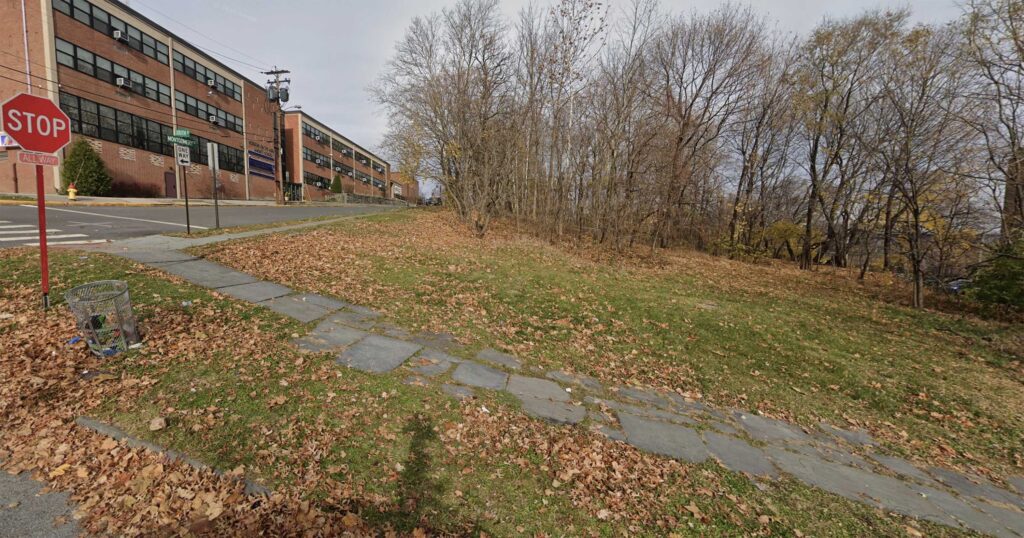
At the Newburgh city council work meeting of April 23, a representative of Kearney Realty & Development Group announced what the developer called the “first in the nation” right-to-return policy for descendants of people displaced by Newburgh’s urban renewal program.1
Twenty percent of units at a forthcoming development on urban renewal land would be reserved for descendants of households the city’s urban renewal program bulldozed out of existence during the 60s and early 70s. The guarantee, Kearney said, would take the form of a fifty-year deed restriction.
Tamika Stewart, who represents Ward 3, asked a simple question. Is the right of return guaranteed?
Kearney’s answer: it’s a deed restriction for fifty years.
The exchange, in its compressed form, contains the entire question this essay is about. What was taken from the displaced community in 1965 was ownership. What is being offered to the descendants in 2026 is a preferential rental option, guaranteed for the duration of an LIHTC affordability covenant, on land their grandparents lost.
This is not reparations. It is the language of reparations applied to a transaction that is structurally not reparative. It is, more sharply, the active continuation of the harm into a new generation, performed under a banner that obscures what is actually happening.
This is the second of three pieces about the disposition of public property in Newburgh. The first piece, We Know Who You’re Working For, addresses the Newburgh Community Land Bank’s parallel pattern of disposing tax-foreclosed residential property to institutional rental developers rather than to qualified owner-restorers. The two pipelines operate under different statutes, on different categories of property, with different governing bodies and procedures. The Land Bank operates under General Municipal Law Article 16. Kearney’s project is on urban renewal land held directly by the city under General Municipal Law Article 15. What they share is the same outcome-producing logic: a structural preference for institutional recipients, encoded in the financial architecture each pipeline uses, with the result that property that came into public hands through state-authorized procedures flows back out to institutional buyers rather than to the community whose claim on the property is strongest.
What was taken was ownership
Between 1962 and 1974, the City of Newburgh cleared roughly 120 acres of waterfront land and displaced an estimated 15,000 residents.2 The community on that land was predominantly Black. It included a substantial population of homeowners alongside tenants. As Phil Howard, whose family was displaced, recalled: “a lot of people who were displaced went from being homeowners to renters. That changes the family structure. It tore a lot of families apart, because [their home] was their nest egg.”3 After urban renewal, the survivors and their descendants were predominantly renters.
The arithmetic of the harm is precise. An owning population was converted, by federal program, state authorization, and local execution, into a renting class. Deeds became leases. Equity became rent. The monthly payment that had been going into principal and appreciation began, instead, to go to a landlord.
What Kearney is offering is a preference to rent on the same land.
The proposed remedy for the loss of property is a preference to pay rent to someone else, on the land the city’s urban renewal program acquired from the displaced community’s grandparents through a deliberate sequence: a formal blight designation that depressed market values for years, compensation set at those depressed values, and eminent domain against the owners who would not accept the devalued offer. The equity that was stripped from the displaced is not being restored. It is, in fact, being re-created — and it now is going to Kearney Realty & Development Group. For fifty years, a descendant of a family whose home was demolished in 1965 may, at the front of a line, sign a lease. Kearney collects the rent. Kearney builds the equity. Kearney holds the appreciation. At year fifty, the deed restriction expires and Kearney or its successor enjoys the land free and clear.
This is not reparative. It is the completing gesture of what urban renewal began.
How the dispossession actually worked
The reparative argument cannot be understood without the mechanism of the original taking. Most discussions of urban renewal treat the program as a general historical atmosphere — bulldozers, highways, “the projects” — without walking through the specific legal and administrative steps by which, in city after city across three decades, predominantly Black and working-class communities were moved off their land and their equity was extinguished. Those steps matter. They matter because the remedy must operate at the same level of government as the injury. They also matter because the same operating logic, in modified form, is at work in Newburgh right now, on adjacent property, under the same city’s authority.
Urban renewal was a federal-state-local stack. Title I of the Housing Act of 19494 authorized the program and funded two-thirds of the net project cost — the gap between what the local urban renewal agency spent to acquire and clear the land, and what the cleared parcels resold for. The local one-third match could be, and routinely was, satisfied “in kind” — a new school, a highway, infrastructure the city was going to build anyway counted toward the match. New York’s General Municipal Law Article 155 — the Urban Renewal Law — supplied the state’s enabling legislation, authorizing municipalities to create Urban Renewal Agencies as Local Public Agencies with the power to take property by eminent domain.
Newburgh’s Urban Renewal Agency was the Local Public Agency. It surveyed the East End. It made a formal finding that the area was “substandard or insanitary” — a “slum” — and produced an Urban Renewal Plan calling for clearance and redevelopment. The city council approved the plan. HUD approved the plan and committed federal funds.
The blight designation was the legally determinative step. Without it, the agency had no authority to condemn property. With it, every property inside the designated area became subject to acquisition, whether the owner wanted to sell or not. The designation also did something rarely acknowledged in the official narrative: it destroyed the market value of every property inside the designated area, including properties that were not blighted at all. Once an area is announced for clearance, no bank will write a new mortgage inside it. No buyer will purchase a building slated for eventual condemnation. Landlords stop maintaining properties whose acquisition by the agency is a matter of time. Appraisers, constrained by comparable-sales data, produce valuations that reflect the collapsed post-designation market rather than the healthy pre-designation market. This is the mechanism known in housing law as condemnation blight. The formal blight finding creates the economic evidence of blight, in a self-executing prophecy.
Just compensation under the Fifth Amendment is calculated at fair market value at the date of taking. By the time the agency acquired a property, the value had often been depressed for years by the agency’s own declaration. The owner was paid the depressed number.
The Newburgh documentary record preserves specific examples. The owners of 254 Montgomery Street purchased their building for $9,500 in 1955. The Urban Renewal Agency appraised it at $6,000 in 1966. They were paid $6,000. The building was rescued from demolition by preservation activists, and recently sold, after restoration by subsequent private owners, for $675,000 in 2024.6 The 2024 figure is what the family would have had, had they held it. The 1966 figure is what they were paid for it. The difference is the wealth that was transferred out of the community by the program.
Tenants — who comprised much of the East End population — received less than the owners. Before the Uniform Relocation Act of 1970,7 federal law imposed no relocation obligation. After 1970, tenants were entitled to relocation assistance only if they relocated to housing the local agency certified as “decent, safe, and sanitary,” a discretionary gate the agency routinely used to deny benefits.
Once acquired, the cleared parcels were resold to private redevelopers at prices written down by the federal subsidy. Private property, taken by government, transferred to other private parties at below-market prices. The Fifth Amendment permits this. The Supreme Court’s 1954 decision in Berman v. Parker,8 unanimous, with Justice Douglas writing, authorized it: “slum clearance” was a legitimate public purpose, and the legislature’s judgment about what constitutes public purpose was owed broad deference.
At no point in this sequence was any individual act illegal. The survey was legal. The designation was legal. The appraisals were legal. The condemnation petitions were legal. The compensation awards were legal. That is the point. The dispossession was accomplished through the faithful operation of a legal system specifically constructed to accomplish it.
The legal doctrine, and why it should trouble everyone
Berman v. Parker is the doctrinal foundation of every urban renewal taking in American history. It is also one of the most criticized decisions in modern Takings Clause jurisprudence. Justice Thomas has repeatedly called it constitutional error. The Institute for Justice has spent two decades arguing it was wrongly decided. The Supreme Court’s 2005 decision in Kelo v. City of New London9 extended Berman’s logic — allowing the taking of Susette Kelo’s pink house in a non-blighted neighborhood so that the land could be transferred to a private redeveloper — and provoked a cross-ideological public backlash so intense that more than forty states passed eminent domain reform statutes in response.
This is the point where the reparations argument and the property-rights argument converge. A property-rights conservative appalled by Kelo has every reason to be exponentially appalled by urban renewal, because urban renewal did Kelo at industrial scale, for three decades, across hundreds of American cities, against communities whose demographic composition ensured their political powerlessness. A liberal appalled by the racial dimension of urban renewal has every reason to understand the property-rights dimension as the mechanism through which the racial harm was administered. The two critiques are not opposed. They converge on the same institution: a government that used the formal machinery of legality, compensation, and professional process to transfer wealth from vulnerable communities to politically connected recipients.
This essay is written with the understanding that its readers hold a range of political views. Its argument does not depend on a particular politics or ideology. It depends on the proposition that a legal mechanism which strips equity from a community, administered through the faithful operation of every procedural step along the way, is not made just by the legality of its parts. The harm was the stripping of equity. The remedy must be the restoration of equity. Anything less than that — including a fifty-year deed restriction granting preference to rent on the same land — is the administration, under a new name, of the same sequence the community has yet to recover from.
The taking was lawful. That is the problem, not the defense.
The numbers Kearney is using
Kearney announced that units at the development would be priced at 40, 60, 80, and 100 percent of Area Median Income. Those numbers sound impressive until they are translated into dollars.
Newburgh’s affordable housing AMI is calibrated on the Kiryas Joel–Poughkeepsie–Newburgh Metropolitan Statistical Area, not on the City of Newburgh itself. That metro pulls in the wealthier suburbs of Orange and Dutchess counties and averages them with the city, producing an AMI that is higher than what Newburgh residents actually earn. The 2025 30 percent AMI limit for a four-person household in the MSA is $36,900, which places 100 percent AMI at approximately $123,000 for a family of four.10 The Kearney tiers translate, approximately:
40 percent AMI: roughly $49,200 for a family of four 60 percent AMI: roughly $73,800 80 percent AMI: roughly $98,400 100 percent AMI: roughly $123,000.
Set those numbers next to the City of Newburgh itself. The median household income in the city in 2023 was $51,006. Twenty-five percent of Newburgh families live below the poverty line. The median income of Newburgh renter households was $34,522. The median household income for Black Newburghers, per the 2023 Habitat Newburgh analysis, was $30,578.11
A typical Newburgh renter household earns roughly 28 percent of the MSA AMI. The median Black household earns roughly 25 percent. Both are below Kearney’s lowest tier. A family at the median Black household income in Newburgh — the exact demographic the right-to-return policy purports to remedy — does not earn enough to qualify for the cheapest unit in the building. They would need to earn 60 percent more to clear the 40 percent AMI floor. Meanwhile the 100 percent AMI tier, at roughly $123,000 for a family of four, is more than double the city’s own median household income. That is not affordable housing in any meaningful sense. It is market-rate housing for commuters, priced off the Hudson Valley’s metro median, built on land the city took from a Black community, and packaged inside an “affordable” envelope so the public subsidy can be claimed.
There is no 30 percent AMI in Kearney’s stack. No 20 percent. That is where many of the descendants of the displaced actually live. The preference policy sends them to the front of a line for units they cannot afford to sign a lease on.
This is not a reparative objection. It is a critique from the plan’s own stated premise. Kearney said this is for the displaced in the first instance, Newburghers in the second. They cannot afford it.
“First in the nation” is not true
Kearney claimed the plan is the first of its kind in the country. They cited a plan in Seattle that was similar, but never executed. Citing no other, they are therefore first.
It is not close to first. Portland, Oregon has run exactly this kind of program since 2014. The N/NE Preference Policy12 grants housing priority to people whose families were displaced by urban renewal in inner North and Northeast Portland. It operates at scale — the city’s commitment has grown to approximately $70 million — and it does something Kearney’s plan does not: it includes a homeownership track with substantial down-payment assistance, so that at least some of the equity that was stripped can be rebuilt.
San Francisco has issued Certificates of Preference since 1967 — fifty-nine years — to families displaced from the Western Addition and SoMa. California law recently extended those certificates to descendants. In 2023, the city’s own African American Reparations Advisory Committee characterized the original certificates as “worthless promissory notes,” honored rarely, tracked poorly.13 Austin has legislated a preference framework. Atlanta has studied one. Evanston, Illinois has operated a municipal reparations program for years. Kearney did not invent this. Kearney adopted the weakest version of a model other cities have been running, critiquing, and trying to strengthen for more than a decade.
Anthony Grice, a former at-large city councilperson, has written that he advocated for the right-to-return framework while in office. Grice writes that his family was displaced from urban renewal land and that they lived “next to” Councilman Shakur’s family. He cites Portland’s N/NE Preference Policy as the model that guided his work and links a Portland State University thesis on its operation. In the same statement, Grice writes that “homeownership should be part of the plan too,” that he has had conversations with the Land Bank and Habitat for Humanity about smaller affordable homes for descendants, and that the PILOT terms warrant reexamination “before moving forward, but not too long.”
Grice’s account locates the policy in the Portland tradition. The argument of this piece is that the Portland tradition itself, while a meaningful improvement on what Kearney has delivered, accepts as given the financing apparatus that the historical harm itself damaged. The reparative step beyond Portland is the cooperative-and-community-land-trust framework set out below. That framework is not what Kearney proposed. It is also not what Grice has called for.
Sean Kearney has been working on this project for approximately five years. He is approximately three and a half years into his contract with the city. Five years is enough time to consider alternative structures, to engage with descendants, to commission the descendant-identification research that would let the right of return operate against an identified population, to evaluate cooperative and community-land-trust forms against the rental form. None of that work was done. The deal advanced in its current form not because alternatives could not be considered but because the deal in its current form is what was wanted. The time-pressure framing — that the deal must advance now, on the schedule it advances on, because there is no time for further consideration — is incompatible with a five-year origin.
The pathway not taken
There is a recognizable historical pattern here, which some may find to be a reach. I am reaching anyway.
After the Civil War, the political question of what would replace enslavement as the relationship between Black labor and the land was answered, not with forty acres and a mule, but with sharecropping on the same plantations under contractual arrangements with former enslavers.
The harms are not equivalent. The structural answer is.
The Kearney plan is the contemporary form of that answer: descendants of the displaced offered tenancy on the land their forebears owned, with the wealth the rental produces flowing to the developer rather than accumulating in their own hands. The CLT framework is the contemporary form of the alternative answer that was rejected at Reconstruction and is being rejected again now.
The legal asymmetry the Kearney plan reveals is worth stating directly. The rental preference required Kearney to lobby the state for a regulatory carve-out, because rental preference policies generally implicate fair-housing scrutiny in ways that limited-equity cooperatives and community land trusts do not. Each rental vacancy is a transaction. Each transaction implicates the renting public. A preference framework operating at the unit-by-unit level over fifty years runs into fair-housing scrutiny at every turn. That is why a special carve-out was needed.
Limited-equity cooperatives, community land trusts, and other shared-equity ownership structures sit in a different legal space. The transactions establishing ownership occur once, at the formation of the cooperative or the conveyance of the trust property. Membership in the cooperative or beneficiary status in the trust is established through the founding documents. The corporate or trust form holds the property. Subsequent transfers of shares or beneficial interests can be restricted to other members or beneficiaries through the governing documents, in ways that fair-housing law generally accommodates because the restriction is internal to the entity rather than operating as a discriminatory practice in the housing market. Cooperatives have used resale restrictions and approval processes for decades. Community land trusts have used beneficiary-class definitions. None of these run into the kind of fair-housing scrutiny a rental preference policy generates.
The cooperative and trust forms have existed in New York housing law for nearly seven decades. The Mitchell-Lama program, established in 1955, has operated cooperative housing on this principle since the Eisenhower administration. Cooper Square Mutual Housing Association on the Lower East Side — whose offices were a block away from my home of 41 years in The Village Voice Building, next to the veterinarian that I used, and that I walked past nearly daily — completed its mutual-housing conversion in 2012 after a thirty-year struggle. The Dudley Street Neighborhood Initiative in Boston has held land in trust since 1988. The legal infrastructure for the reparative ownership instrument exists. It does not require invention. It does not even require lobbying. It does not require state-level regulatory innovation or carve-outs or pilot studies. It requires only the formation of a cooperative or trust, which any nonprofit can do.
What the city is celebrating as unprecedented is the regulatory carve-out that was necessary because the developer chose the harder legal pathway. The harder pathway is the pathway that produces tenancy rather than ownership. The harder pathway is the pathway that protects the developer’s ownership of the underlying property across the deed restriction’s life. The easier pathway, the pathway that does not require lobbying, the pathway that has been available since 1955, would have produced descendant ownership through cooperative or trust structures. That pathway was not chosen.
The legal asymmetry has an economic corollary. Under the rental-preference path Kearney chose, the developer owns the building and the underlying land for fifty years, collects the rent across the affordability period, captures the developer fee at construction, captures the property management fee across the operating life, captures the tax credit equity through syndication, captures the PILOT yield reduction across the PILOT term, and reverts to unrestricted ownership at year fifty when the deed restriction expires. Under the cooperative or community land trust path Kearney did not choose, the developer would have been paid for construction and would not have retained ownership of any of those assets. The land would have been transferred to the trust at nominal cost. The appreciation across fifty years would have flowed to the descendants who hold cooperative shares. The rental income would have been replaced by share carrying charges paid into the cooperative’s operating budget, none of which would have flowed to the developer.
The difference between the two paths, across the fifty-year window, is plausibly in the high tens of millions of dollars in developer capture. The developer chose the path that captured. The institutional apparatus accommodated. The carve-out that was needed to make that path legally workable is now being celebrated as the city’s reparative innovation. The cooperative form that has been part of New York housing law since the Eisenhower administration is treated, in 2026, as something that requires explanation.
The Democratic Party’s housing policy infrastructure has, over the past forty years, internalized the developer-led, rental-dominated affordable-housing model so completely that the alternatives — public ownership, cooperative ownership, community land trust ownership — are no longer reflexively considered. They have to be re-introduced as innovations, when they are in fact the recovered toolkit of an earlier era. The Loft Law of 1982, New York City’s right-of-first-refusal in rental-to-condo conversions in the 1980s, the Mitchell-Lama cooperative housing of the 1950s and 1960s — the city’s institutional leadership came of age in a political era when these instruments were being unbuilt rather than extended. The result, in 2026, is that descendants of urban renewal displacement are offered a fifty-year preferential rental option as the best the city’s imagination can produce, while the legal infrastructure for the reparative ownership instrument sits unused on the shelf.
The contract itself contains its own escape valve. The language commits to a preferential rental option for descendants of the displaced, conditional on those descendants being identified.
The contract does not commit to identifying them.
There is no funded research effort, no methodology specified, no community-engagement protocol, no timeline within which the descendants must be located before the right of return defaults to whoever applies and qualifies. The deal grants the preference. The deal does not commit to producing the population the preference applies to. If no descendants are found by the time leases are signed, the preference quietly defaults to other applicants meeting the AMI tiers, and the reparations framing remains as language without operational consequence. It is in this sense: that without an organized, funded effort with teeth in it to identify the descendants and bring them into the framework, the gestural meaninglessness of the right of return is truly exposed.
Fifty years is a financing calendar, not a reparative one
Kearney described the guarantee as a fifty-year deed restriction. Low-Income Housing Tax Credit deals run on thirty-year affordability covenants — fifteen-year initial compliance plus fifteen-year extended use.14 Fifty years is a modestly stretched version of the same financing timeline every developer in the state uses. It is the number that makes the deal pencil for the capital stack. It has no relationship to the timeframe of the harm.
Newburgh’s urban renewal program ran from 1962 to 1974. The harm is sixty-two years old at its oldest, fifty-two at its youngest, and still compounding. A fifty-year deed restriction means the preference expires in 2076. After that, the land reverts to unrestricted market use. The descendants of the people displaced in 1965 will be made to understand, at that moment, that the harm has a shelf life.
Portland’s preference policy does not sunset. San Francisco’s certificates do not expire on the holder. A time limit on a reparative claim is a statement. It is the city saying that the harm can be closed out, and that the city’s relationship to the community it destroyed has an expiration date the community had no say in setting.
The plan does not just fail to repair. It compounds.
This essay has so far argued that the Kearney plan falls short of reparations. That framing is too generous.
A plan that falls short of an adequate remedy is one that needs improvement. The Kearney plan is something else. It does not merely fail to repair the original harm. It extends the harm into the present and across the next fifty years, in at least seven distinct ways.
First, the land. The acreage Kearney is building on was taken from a specific community through the procedures already described. That land has been held in public hands for sixty years, available at any point for return to the descendants of the people it was taken from. The decision to dispose of it now to a private for-profit developer rather than to the descendants’ community is a choice being made in 2026, with full historical knowledge, by officials who could have chosen otherwise. The 1965 taking was performed under a constitutional doctrine that compelled deference. The 2026 disposition is performed under no such compulsion. The earlier act had a legal excuse the current one does not.
Second, the equity. Every dollar of land appreciation that accrues to Kearney over the next fifty years is a dollar that does not accrue to the descendants. The 1965 taking stripped a one-time quantum of equity. The 2026 disposition begins a new fifty-year stream of land appreciation flowing away from the descendants. The losses are additive.
Third, the subsidy. Kearney’s project will be financed with LIHTC, HCR programs, a PILOT, and other public subsidies the descendants help fund through the tax base. They will be paying, as taxpayers, to subsidize a developer building on land their grandparents owned, at AMI tiers the descendants cannot afford. They are paying twice — once in 1965, when their grandparents received below-market compensation for the property, and again in 2026, through the public funds that make the project’s economics work.
Fourth, the political space. The Kearney plan is being marketed as the city’s reparations program. If it is accepted as such — if it becomes the named first-in-the-nation reparations effort — it forecloses the political room in which a more adequate framework could later be built. Officials will say, for decades, that the city’s reparations were addressed in 2026. The descendants will be told their claim has already been honored. A plan inadequate to the harm occupies the slot where an adequate plan would otherwise sit, and it occupies that slot for the full fifty years of the deed restriction.
Fifth, the public housing stock. The Kenney public housing complex stands within a national pattern in which public housing was often built, in part, to receive families displaced by urban renewal clearance. Whatever its specific origins, Kenney is the public housing stock that has, for decades, served the population whose ownership stock was destroyed. It was already a diminished remedy — tenancy in concentrated public housing rather than the ownership and community that had been destroyed. At the same April 22 council meeting, the mayor signaled that Kenney is next: “things will be changing at Kenney” because of “what we’ve been doing.”15 In 2026, that sentence has only one direction: public housing restructuring through RAD conversion or Section 18 disposition, with a private mixed-income redeveloper receiving the assignment. The grandparents lost ownership. The parents received public housing tenancy as a partial replacement. The grandchildren are now being positioned to lose the partial replacement and receive, in exchange, a private rental at AMI tiers most of them cannot afford. Each generation has received less than the one before.
Sixth, the use of the harm itself. The descendants’ historical injury is being deployed, in 2026, as a marketing premise for the Kearney development. “First in the nation right of return” is a feature that distinguishes the deal, justifies the subsidies, attracts favorable press, and may appeal to mission-aligned institutional investors. The community whose loss is being invoked has not consented to that use. Their grandparents’ dispossession is being monetized by a developer who had no role in the original harm and who is collecting the appreciation that should have flowed to the descendants. The harm itself, once an injury, is now also an input.
Seventh, the commercial component. The development includes four ground-floor commercial spaces. One is reportedly being subsidized at approximately $6.50 per square foot for a minority- or women-owned business enterprise tenant. The other three are being leased at market rate. The pattern is the same operation at a different scale: a small reparative gesture toward the descendant or minority population, embedded inside a structure whose primary function is market-rate disposition. The reparative language operates for the small gesture. The market-rate structure operates for everything else. The descendants of the displaced will not, in any operationally meaningful sense, own commerce on the land their grandparents owned commerce on. They will, at best, lease it at market rate from the developer, with one MWBE space reserved at subsidized rent to one tenant. That is not commercial restoration. It is the same allocation problem the residential analysis names, scaled to the commercial floor.
The Kearney plan, evaluated honestly, is not a remedy that falls short. It is an extraction that succeeds, sold under the language of the remedy that has yet to be built.
What the meeting itself revealed
Tamika Stewart asked whether the right of return was guaranteed. She also asked whether it could be codified. Councilman Ron Zorrilla, who represents Ward 4, asked for the project’s pro forma — the financial projection of revenues, expenses, debt service, PILOT yield, developer fee, and reversion value over the life of the deal. He had requested it on March 18. He had not received it. The meeting was thirty-six days later.
The procedural questions were the wrong questions. The right question was whether the offer should be codified at all. A right of return that is a fifty-year preferential rental option, on land taken from a community whose ownership was extinguished, is not a remedy. It is the structured continuation of what was taken. To codify it — to write it permanently into deed restriction, into ordinance, into the supermajority vote — is to lock the harm into place for fifty years. The procedural diligence the council members brought to the question would have made the codification more enforceable. It would not have made the underlying arrangement reparative. A non-reparative offer carefully codified is a non-reparative offer carefully codified, and it lasts longer than one that is not.
Stewart’s question about whether the promise could be codified, taken seriously, opens onto a longer answer than the meeting allowed. A deed restriction on one parcel, enforceable by the city, expiring in fifty years, is what Kearney offered. It is “codified” only in the sense that it exists as a recorded instrument. A city ordinance establishing a right-to-return preference applicable to every future disposition of urban renewal land would be stronger as a procedural matter, because it binds the city rather than a single developer. A state statute imposing a preference framework on every municipality that received federal urban renewal funds between 1949 and 1974 would be stronger still as a procedural matter, because it survives council turnover and operates at the same level of government as the injury. None of those procedural strengthenings would convert the underlying offer into a remedy. They would only convert the underlying non-remedy into a more durably codified non-remedy. The codification levels matter only if the thing being codified is worth codifying.
Zorrilla’s pro forma request is closer to the underlying question, because it is a request for the financial information necessary to evaluate whether to enter into the disposition at all. Under General Municipal Law, the disposition of urban renewal land requires a six-of-seven supermajority of the city council.16 The supermajority exists because the legislature recognized that disposition of land taken from a displaced community is a heightened act with long consequences. A council member stating on the record that he lacks the information to meet that standard is not a complaint. It is a finding.
The mayor’s response was to dismiss Zorrilla as “new” and to assert that the project had gone through a “strenuous SEDAC process.” Under New York law, there is no junior tier of council membership. Every member has equal standing, equal vote, and equal entitlement to the information necessary to exercise that vote. SEDAC — the Strategic Economic Development Advisory Council — is a volunteer, non-chartered advisory committee with no statutory authority over urban renewal land dispositions. Its review is not a substitute for a council member’s informed vote.
At the close of the meeting, before the Kearney representative left the dais, Corporation Counsel asked Kearney for a copy of the pro forma. This came moments after she had assured Zorrilla that she had already sent it to him, and that she would send it again. The two statements cannot both be fully true. If she had already sent him the document, she did not need to request a copy from the developer at the close of the meeting. If she needed a copy from the developer, she did not, at the moment she told Zorrilla she had sent it, possess the document she claimed to have sent.
The thirty-six days during which Zorrilla did not receive the pro forma were not an administrative oversight. They were the interval during which the city did not have what it needed to answer him, and the interval during which the developer did. The supermajority vote on the disposition of urban renewal land was being managed, at the level of the city’s own legal officer, without the underlying financial document in the city’s possession.
The mayor chuckled when Zorrilla raised the issue.
What a reparative framework would actually look like
Portland’s N/NE Preference Policy directs descendants to the front of the line for housing the city is already producing — some rental, some ownership, with down-payment assistance making the ownership track more accessible. That is a meaningful improvement on Kearney’s pure-rental preference, and Portland’s framework should be acknowledged as the closest functioning American model for what reparative housing policy can look like within conventional tenure structures.
But Portland’s framework accepts those tenure structures as given. The descendants are routed into the front of a line for individual mortgages, individual ownership, and individual equity-building, all of which require the descendant to clear the financing gates that historical wealth and credit damage have made hard to clear. Down-payment assistance ameliorates one of those gates. It does not address the deeper problem that the conventional ownership form itself was built around financial assumptions the descendants of the displaced have been systematically excluded from meeting.
The reparative move that exceeds Portland is to build the ownership at the level of tenure structure, not just at the level of access preference. A community land trust holds the underlying land in perpetuity on behalf of the displaced community and its descendants. A limited-equity cooperative or resident-owned housing structure holds the building, with shares owned by descendants, governed by descendants, and resold at restricted prices to other descendants. The descendant becomes an owner immediately upon move-in, without clearing a conventional mortgage gate, with equity that builds through share appreciation rather than through individual home appreciation, and with permanent affordability built into the structure rather than relying on individual financial discipline to maintain it.
The instrument is a Community Land Trust. The principle is that land stays in the hands of the community that was stripped of it, and ownership is transferred to the descendants. The Dudley Street Neighborhood Initiative in Boston has operated on this model for forty years. Cooper Square Mutual Housing Association in Manhattan is the cooperative-conversion version of the same principle.17 Both work. Both demonstrate that the alternatives the Kearney plan does not offer exist and are operational.
The Newburgh Descendants’ Community Land Trust. The city transfers the remaining urban renewal parcels — the acreage the city still controls — to a nonprofit trust at nominal cost. The trust holds the land in perpetuity. On that land, the trust develops or rehabilitates housing and sells the structures to descendants of households displaced by Newburgh urban renewal between 1962 and 1974, identifiable through the archival records David Hochfelder of the University at Albany has spent a decade inventorying.18 Descendants buy the homes at an affordable price; the land remains in the trust. When they sell, they keep the appreciation on the structure plus a defined share of land appreciation. The trust restricts resale to other descendants or qualifying buyers, preserving affordability across generations while allowing each owner to build real equity.
Governance by the descendants. The trust’s board is majority descendants of the displaced, with reserved minority seats for historians, housing practitioners, and city representatives. This resolves the enforcement problem that kills every deed restriction — the city suing its own development partner — because the beneficiary class controls the trust that holds title. The class is not asking the municipality to enforce against the developer. The class is the developer.
Funding. Four stacked sources. First, the land itself, transferred at nominal cost. Second, a 20 percent carve-out from the PILOT revenue of every project on urban renewal land, including Kearney’s. The Kearney PILOT has not yet been executed. A 20 percent carve-out routed to the trust over fifty years converts the public subsidy embedded in the Kearney deal into a reparative funding stream. Third, HCR capacity and operating grants under existing Affirmatively Furthering Fair Housing programs. Fourth, a reparations-specific revenue source identified by the New York State Community Commission on Reparations Remedies when it issues findings.
Legal architecture. The beneficiary class is constructed on Portland’s model: descendants of households displaced from specified urban renewal project areas in Newburgh, documented by address in the surviving agency records. The class is race-neutral on its face because the documented government action — the taking — is what defines it. The framework survives post-Students for Fair Admissions scrutiny because the preference tracks a traceable government injury rather than a protected status. Every named beneficiary has a pre-existing file in the archive.
Phasing.
Three moves, in order.
First, the city council passes a local law establishing the Newburgh Descendants’ Community Land Trust, naming its initial board, defining the beneficiary class, and committing the remaining urban renewal parcels to transfer at nominal cost. This is a single ordinance. It does not require state action. It does not cost the city a dollar of general-fund money. It can be drafted in thirty days. It establishes the framework within which every subsequent disposition of urban renewal land — every parcel the city still controls — will be evaluated.
Second, the council directs Corporation Counsel to insert a PILOT-carve-out clause into every future urban-renewal-land project and to renegotiate the Kearney PILOT — which is not yet executed — to include the same provision. Kearney will object. Kearney is not in a position to walk away, because the project is fully entitled and the construction financing depends on the PILOT. This is the leverage moment. It is now. Use it.
Third, the city formally petitions the state Community Commission on Reparations Remedies to adopt the Newburgh framework as the model for a statewide reparative housing structure, with matching state appropriations to the same trust form in Kingston, Buffalo, Rochester, Syracuse, Albany, Rockville Centre, and the other documented urban renewal cities. This is where the 430-city dataset I compiled with the University of Richmond’s “Renewing Inequality” records carries its full weight. The data establishes that the harm was not local, the remedy cannot be local, and the state has the archival, legal, and financial tools to act.
The pattern
This blog has documented, over recent months, a recognizable pattern in Newburgh’s municipal conduct: the substitution of a procedure for a promise. A deed restriction for equity. A regulatory citation for an innovation. A fifty-year timer for a debt that has run sixty years and is still running. Tiers starting at forty, for descendants living at twenty. A rental preference for community wealth-building. A “strenuous process” for a pro forma a councilman has been requesting for thirty-six days. A chuckle for an answer.
The pattern is structural. It is visible across both disposition pipelines the city operates — the Land Bank pipeline addressed in the companion piece, and the urban renewal pipeline addressed in this one. The mechanisms differ. The outcomes converge.
The harm was the loss of equity. Any framework that does not restore ownership is not a remedy. It is the completion of the original taking, performed more politely, with a ribbon-cutting.
First in the nation, they said.
First in the nation to announce, on urban renewal land, in the presence of the descendants of the displaced, that the right of return is … a lease.
* “The Preferential Rental Option for the Displaced” is a play on the phrase “The Preferential Option for the Poor”, the core principle in Catholic Social Teaching, emphasizing that policies, decisions, and community actions should prioritize the needs of the vulnerable. Rooted in scripture and solidified at the 1968 Medellín Conference and in Gutiérrez’s A Theology of Liberation (1971), it demands that society’s most disadvantaged receive special concern and that justice focuses on lifting them up, not simply putting them somewhere.
This piece is the second of three. The first, “We Know Who You’re Working For,” addresses the Newburgh Community Land Bank’s parallel pattern of disposition under General Municipal Law Article 16. The two pipelines are legally separate but structurally related. Together they describe a portion of the city’s full disposition apparatus.
Next: 2 Washington Waterfront.
© Newburgh Is America
I am a one-man band here — writer, editor, copy editor, fact-checker, legal consultant, publisher and moderator wrapped into one, publishing within a time line that is compressed from the weeks or even months of what is normally allowed for long-form investigative writing into sometimes as little as a few days. Errors and omissions are inevitable in work produced under these conditions. I rely on an informed public to identify them, and where they are identified, the record is corrected. This piece reflects my best understanding at the time of publication and is subject to revision as additional information becomes available.
Sources
- City of Newburgh City Council Work Session, April 22, 2026. Video documentation on the City of Newburgh website.
- Estimates drawn from Newburgh urban renewal program documentation and historical analyses, including the archival research of David Hochfelder, University at Albany, and contemporaneous Urban Renewal Agency records.
- Lynn Woods, “Lost Newburgh: The Tragedy of Urban Renewal, Part 3,” Newburgh Restoration blog, January 19, 2018. Phil Howard is the son of Lily Howard, whose family was displaced from Smith Street.
- Housing Act of 1949, Pub. L. No. 81-171, 63 Stat. 413 (Title I).
- New York Consolidated Laws, General Municipal Law, Article 15 (Urban Renewal Law), §§ 500-525.
- City of Newburgh property and assessment records; preservation history compiled by local preservationists. Specific transaction details on file.
- Uniform Relocation Assistance and Real Property Acquisition Policies Act of 1970, Pub. L. No. 91-646, 84 Stat. 1894.
- Berman v. Parker, 348 U.S. 26 (1954).
- Kelo v. City of New London, 545 U.S. 469 (2005).
- U.S. Department of Housing and Urban Development, FY 2025 Income Limits, Kiryas Joel-Poughkeepsie-Newburgh, NY HUD Metro FMR Area.
- Various sources, including U.S. Census Bureau American Community Survey data and Habitat Newburgh community housing assessments.
- City of Portland, Oregon, North/Northeast Neighborhood Housing Strategy and Preference Policy. Portland Housing Bureau program documentation.
- San Francisco African American Reparations Advisory Committee, 2023 final report; San Francisco Mayor’s Office of Housing and Community Development, Certificate of Preference Program records.
- Internal Revenue Code § 42 (Low-Income Housing Tax Credit); 30-year affordability covenant standard under federal LIHTC requirements.
- City of Newburgh City Council Work Session, April 22, 2026. Mayor Torrance Harvey’s remarks regarding the Kenney public housing complex. Video documentation on the City of Newburgh website.
- New York General Municipal Law Article 15 (Urban Renewal Law), supermajority disposition requirement.
- Dudley Street Neighborhood Initiative, dsni.org; Cooper Square Mutual Housing Association, coopersquare.org.
- David Hochfelder, University at Albany, ongoing archival research on Newburgh urban renewal displacement; “Picturing Urban Renewal” project documentation.