A question for every household in Newburgh — A Public Art Installation, Fall 2027
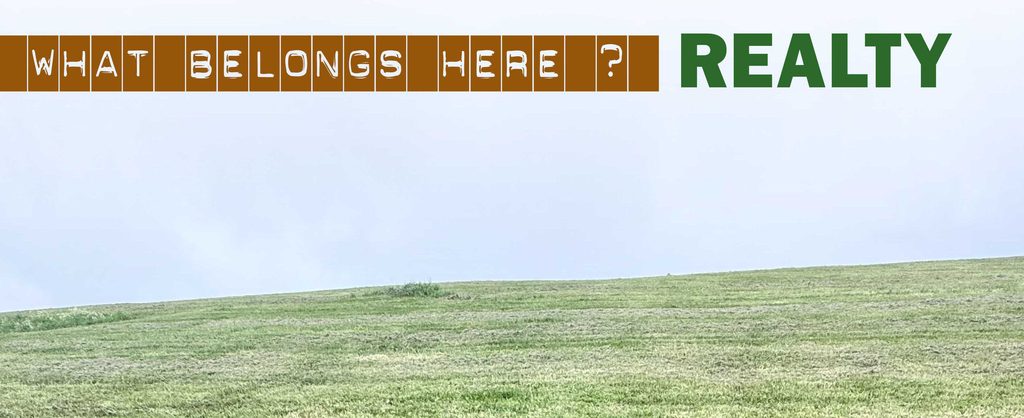
photo © Newburgh Is America
Two generations ago, a large swath of properties in the downtown area of Newburgh was declared “blighted”. The legal designation encompassed properties “with or without tangible physical blight.” This mechanism set in motion the clearance of the entire area, on the promise that something newer and more beautiful would be built. The promised was never fulfilled. Sixty years later, the land remains mostly empty. James Baldwin named what urban renewal meant across America: “Negro removal.”
Six years ago, I had recently moved into our first home in Newburgh. It was winter. A heavy snow had fallen. Driving to the post office, I saw an elderly Black woman, dressed as if for religious service in her Sunday best, walking in the cold. I slowed and asked if she needed a ride. She said she was fine. At the post office, I saw her enter and leave while I was at a window picking up a package. As I started driving back, I saw her again. I pulled up and said, “Hey — I don’t bite!” I opened the door and she accepted. As we drove, she told me, in a soft-spoken way, about her Southern roots, her time in Chicago, and how she came to Newburgh in the 1950s. I asked her, “And you have been here since? So you lived through the urban renewal period?”
“Yes. They tore the heart out of the city. They took a piece of me as well.”
It was 60 years later, but I could hear the pain, still, in her voice.
The land has been held, tax-exempt, for sixty years. Republican and Democratic administrations come and go. The vacancy stays, waiting for the promised development. The blighted declaration is still in force: New York General Municipal Law Article 15, the Urban Renewal Law. This is the statute that authorized the clearance of Newburgh’s East End. It was never repealed. It is in force today.
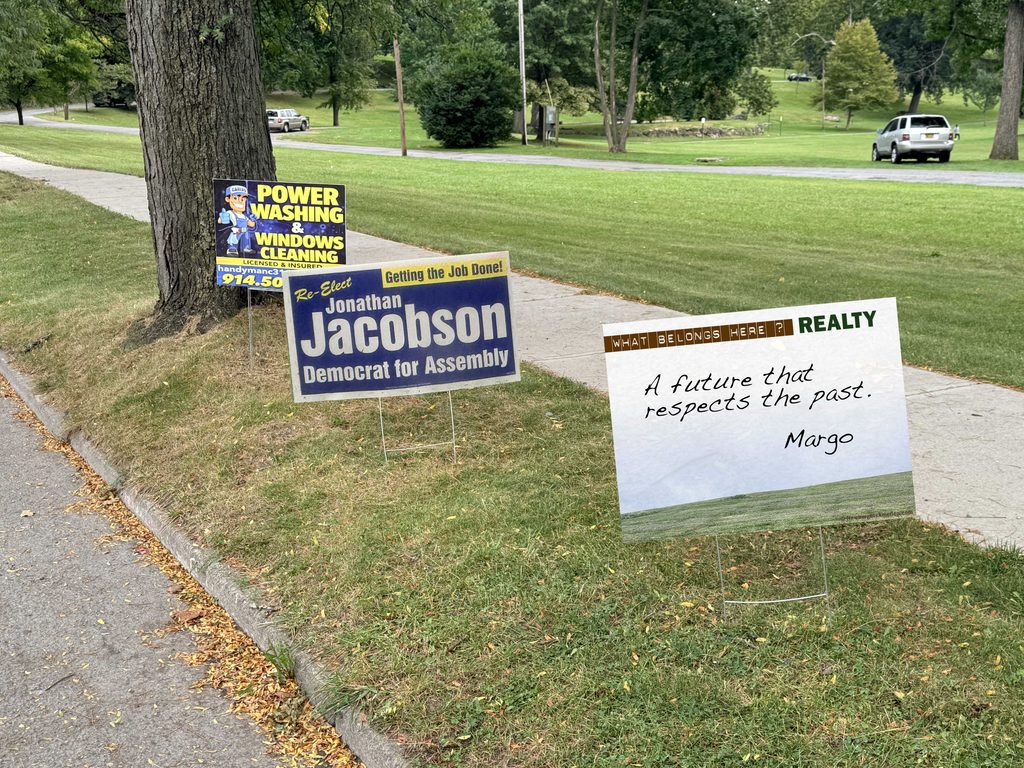
What belongs here?
The city may be closer than ever before to finally making good on that long ago promise. Newburgh is not the city it was in 1970. Some who lived through the clearance are still here. Others were scattered. Some simply left. Thousands have arrived since. Some know the full story, some do not, some don’t care, some don’t want to know.
Last year the city completed the Hillside BOA Nomination Study, which gathered more than 1,200 comments from residents about what this land could become. It may be the most sustained public conversation about the East End in since the Leyland proposal.
I propose building on that beginning over the next twelve months with a citywide art installation that I hope will actually be fun. I have had this idea percolating in my head, in one form or another, for about four years. It would be composed of the voices of thousands of its residents, and it currently goes something like this:
Beginning in the fall of 2026, I will canvass every household in the City of Newburgh — with a team, because no one can do this alone. It will be more like a census than a survey. Each resident is asked one simple question: What belongs here?
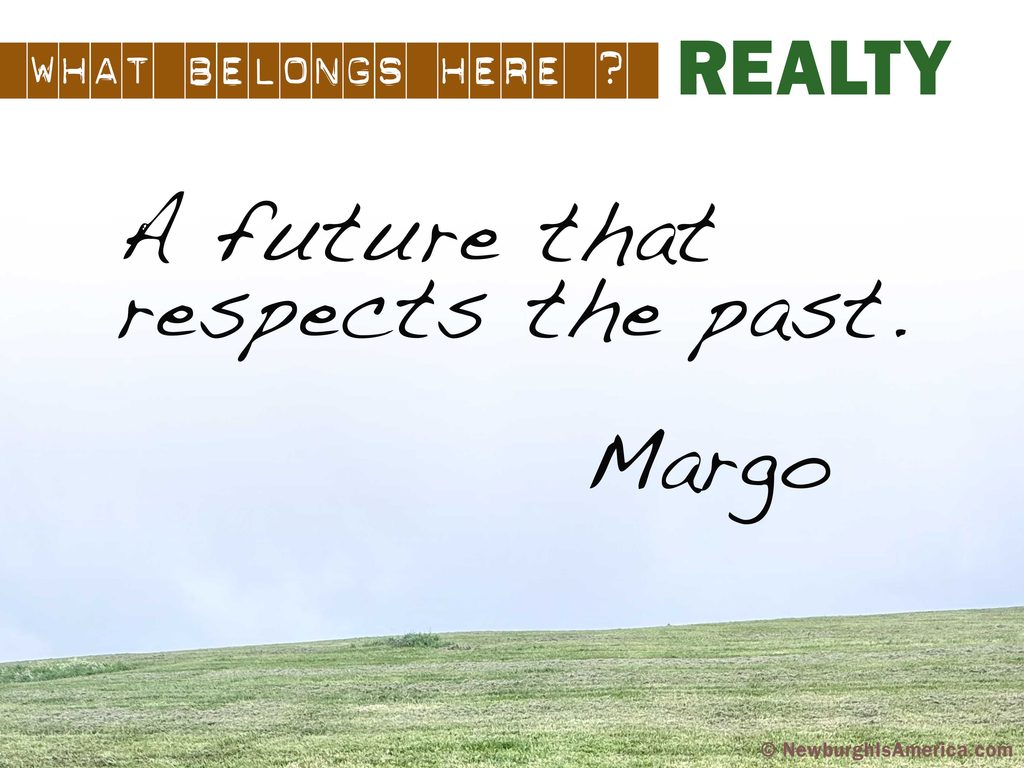
The answer is written in the resident’s own hand, with a black permanent marker, on a lawn sign in commercial real-estate format: the question, the word REALTY, and below it, their answer. There is no wrong answer. Nothing is corrected, edited, or excluded. A fragment counts. A misspelling counts. Three words in Spanish or Mandarin count. Sign your name, or only your first name, or no name at all. The statement enters the record exactly as it was made: this record accepts these voices on their own terms. The acceptance is the subject of the work.
In the fall of 2027, thousands of these signs will be displayed, publicly, outdoors, in the city. Locations will be announced near the time of display. Placement will be random. No sorting, no sequence, no order of any kind imposed. If a wish for an ice cream shop happens to stand beside a grief for the one that was demolished, that is a circumstance, not a plan. Here and there among the residents’ signs, a sign will carry a fragment of the old law, still on the books, in its own words. The work is a record, not an argument.
Think of this as a massive group art show: every participant a credited artist (should they choose); the work’s creation will belong to the thousands who take part. Newburgh Is America is the facilitator.
Details — how to take part, and how to join the canvass, and the “canvas” — will be announced in the coming weeks.
Newburgh neighbors: what do you think of this idea?
photos © Newburgh Is America
© Newburgh Is America
I am a one-man band here — writer, editor, copy editor, fact-checker, legal consultant, publisher and moderator wrapped into one, publishing within a time line that is compressed from the weeks or even months of what is normally allowed for long-form investigative writing into sometimes as little as a few days. Errors and omissions are inevitable in work produced under these conditions. I rely on an informed public to identify them, and where they are identified, the record is corrected. This piece reflects my best understanding at the time of publication and is subject to revision as additional information becomes available.