How Progressive Reform Leads to Council-Manager Government Silos Power Away From Electoral Accountability
PART 3: WHAT THE STRUCTURE DOES – OR DOESN’T – DO
The Kenney Apartments sit at 55 Walsh Road in Newburgh. More than one hundred low-income families and seniors live there. Since 2023, they have not had reliable heat or hot water. Between October 2025 and January 2026, both were shut off entirely. At tenant organizing meetings held by Community Voices Heard, a state-wide housing justice organization,[1] many tenants complained that the city had been ignoring their complaints for 15 years and longer.[2]
The conditions inside are documented: mold in walls and ceilings, sewage leaks, rodent infestations, holes in floors, exposed wiring. More than 160 code violations have been logged.[3] Hundreds of calls to the building’s management went unanswered.
The City Manager stated that he deployed his “full enforcement toolkit.”[4]
Under Chapter 190, the Code Compliance Supervisor — appointed by the City Manager — can issue an emergency order to vacate a building that lacks adequate heat, sanitation, or essential facilities. No prior notice or hearing is required. The code specifically names lack of heat as a triggering condition. The Supervisor can order a landlord in writing to correct violations. If the landlord does not comply, the city can enter the property, perform the repairs itself, and charge the owner for the cost plus a fifteen percent administrative fee. That amount becomes a lien on the property. If unpaid after sixty days, the Comptroller adds it to the next tax levy. The Corporation Counsel — also appointed by the City Manager — can initiate legal proceedings to abate the violations. The city can fine the owner up to five hundred dollars per day for every day the conditions continue. It can suspend or revoke the building’s rental license.[5]
None of this required action by the City Council. None of it required a vote. None of it required a state officer. Every one of these enforcement tools was already inside the kit, available to the City Manager and the staff he appoints.
Yet the tenants went without heat through the winter.
Here is what the council-manager form of government means in practice. The council sets policy but cannot direct operations. Every one of those powers belongs to the City Manager or staff he appoints.
Councilmember Rob McLymore visited the Kenney Apartments. He spoke to residents. He pressed the building’s ownership directly. Management did not respond appropriately. McLymore did not get effective action from the executive side of city government. He went outside the municipal system — to a state officer with independent enforcement power — because the system was not responding. He went to the New York State Attorney General’s office himself.[6]
On February 2, 2026, Attorney General Letitia James sued the owners of the Kenney Apartments.[7]
The City Manager subsequently described the Attorney General’s involvement as the product of an established working relationship between his office and the AG.[8] McLymore’s own public actions suggest a different story. He initiated the contact. He escalated the case. He did what the charter says a council member is not supposed to do — intervene directly in an administrative matter — because the administrative apparatus had failed for years and the charter gave him no other option.
Some may say that this is a story about a bad city manager. That may or may not be the case: my point here is that it is also a story about a structure that makes the city manager the only person with operational authority, and then provides no mechanism for the public’s elected representatives to act when that authority is not effectively exercised.
The tenants of the Kenney Apartments cannot vote the City Manager out of office. They cannot petition for his removal. They cannot demand that their ward councilmember direct city resources to their building. The only thing the charter permitted was for five of seven council members to refuse to renew the City Manager’s contract — and the political math makes that impossible.[9]
So a council member went around the structure. He called the state. And the state did what the city did not.
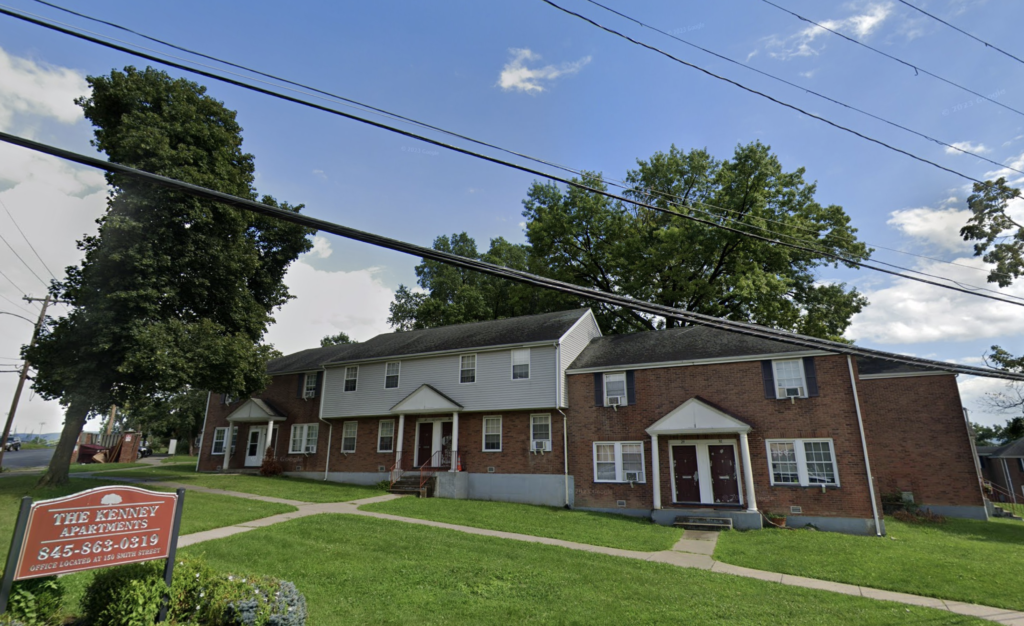
The Kenney Apartments involve one affordable housing complex, one set of tenants, one failure of enforcement of some 160 code violations, that was ultimately addressed — not by the council-manager system, but despite it.
Is this an isolated incident? An anecdotal incident? What follows in Part 4 are four incidents spanning sixty years in which the same structure produced outcomes that were not addressed, that were not reversed, and whose consequences remain visible in Newburgh today.
—————————————————————————
© March 16, 2026
NEXT: PART 4 — WHAT THE STRUCTURE PRODUCED
Notes
[1] Community Voices Heard (CVH) is a member-led, multi-racial organization based in New York State. CVH organized tenant meetings at the Kenney Apartments beginning in 2025. See communityvoicesheard.org.
[2] Tenant testimony at CVH organizing meetings, 2025–2026, attended by this writer.
[3] City of Newburgh code violation records. This writer has attended Newburgh City Council meetings for nine years and has filed systematic FOIL requests related to code enforcement at this property.
[4] Statement by City Manager at Newburgh City Council meeting. Date and exact source to be confirmed.
[5] City of Newburgh Municipal Code, Chapter 190: Property Maintenance and Housing Standards. Enforcement powers include emergency vacate orders, orders to correct, city-performed repairs with cost recovery plus 15% administrative fee and lien on property, fines up to $500/day, rental license suspension or revocation, and legal proceedings initiated by Corporation Counsel.
[6] This writer’s reporting, based on Councilmember McLymore’s public statements and actions at Newburgh City Council meetings.
[7] Office of the New York State Attorney General, press release, February 2, 2026. Attorney General Letitia James filed suit against the owners of the Kenney Apartments.
[8] Statement by City Manager at Newburgh City Council meeting. Date and exact source to be confirmed.
[9] Under the 2011 charter amendment, dismissal of the City Manager requires five of seven council votes. See City of Newburgh Charter, as amended 2011.